Course contents:
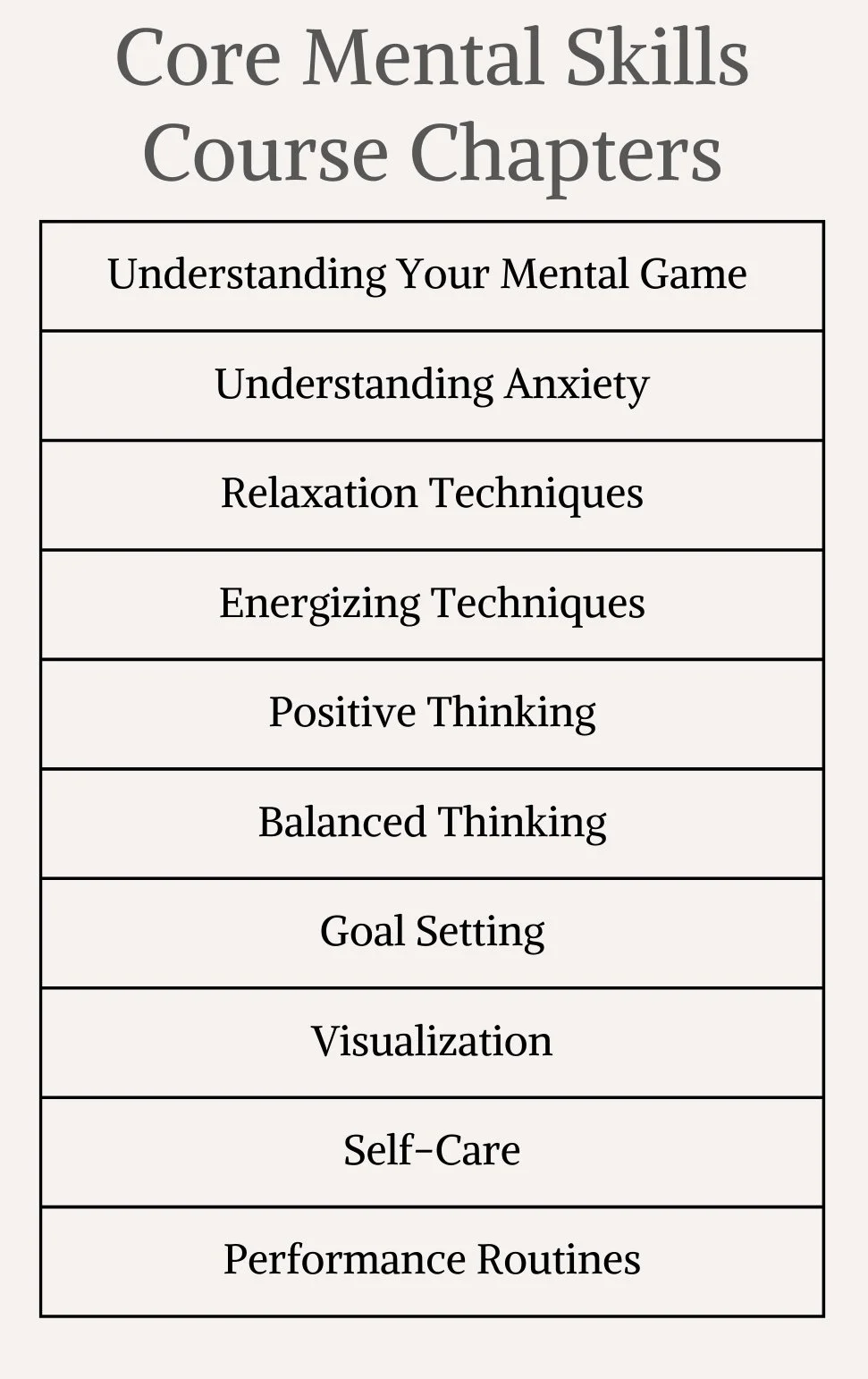
This course contains 10 chapters with between 1 and 3 lessons per chapter.
Every lesson includes a video and a list of exactly what’s included in each lesson, such as a graphic and a worksheet. Every chapter, except for the first two, has a homework task that’s explained as well.
The lessons are designed to be concise and digestible so you can spend 10-15 minutes on each lesson and walk away with concrete strategies that you can try out each week.
Course instructions:
For each lesson, watch the video and complete any provided worksheets, which are linked directly within each lesson. The worksheets are fillable PDFs so you can save them to your computer or print them out. Make sure you save the PDF to your computer/phone or the information you fill in won’t be available the next time you log-in. Alternatively, download the complete digital workbook (which you’ll find in the first lesson) with all worksheets from the course, so you can have all the worksheets in one place. After you finish each chapter’s lessons, you’ll have a homework task to practice during the week. You can also save worksheets to your phone so you can view them or complete the homework tasks on the way to/from practice.
Spend the week practicing the technique in the homework task. If you’re eager to learn the material at a faster pace, spend 3-4 days practicing each technique. Then reflect on your experience using that technique, and move on to the next chapter.
*Please remember that this course is educational and focuses on sport psychology strategies. It’s an opportunity to learn skills that can help with your mental game. No material in this course is intended to be a substitute for the advice of a medical or mental health professional. Please consult a mental health professional for personalized advice.
-
-
How can sport psychology help?
Consider how your mental game impacted your best and worst performances.
Consider how your mental game impacted your best and worst performances.
-
Thoughts, Feelings, and Behaviors
Understand how the connection between thoughts, feelings, and behaviors will help inform the strategies covered in this course.
Understand how the connection between thoughts, feelings, and behaviors will help inform the strategies covered in this course.
-
-
-
-
-
-
Negative and Positive Thinking
Understand your thought patterns and consider realistic goals for developing more positive thoughts.
Understand your thought patterns and consider realistic goals for developing more positive thoughts.
-
I wish I could just stop thinking!
Learn about why it’s so hard to stop thinking and consider more effective ways of approaching negative thoughts.
Learn about why it’s so hard to stop thinking and consider more effective ways of approaching negative thoughts.
-
Learn how to practice positive thinking in a meaningful way.
-
-
-
-
-
-
-
Create Performance Routines
Consider how the strategies you’ve learned can be integrated into your pre-performance, within-performance, and post-performance routines.
Consider how the strategies you’ve learned can be integrated into your pre-performance, within-performance, and post-performance routines.
-
Strategy Review
Reflect on the strategies you’ve learned and create a summary of what you’ll carry with you moving forward.
Reflect on the strategies you’ve learned and create a summary of what you’ll carry with you moving forward.
-